
Bubur Tambun, More than Just A Breakfast.
Written by Regina Stephanie W.
Jakarta is a special place. Growing up from a small city with a not so fast-paced and dynamic place like Jakarta, every day is always a wonder here. You can see how special it is in the rich and diverse breakfast culture found on streets – with all the carts and stalls across every corner of the ever-so-crowded Jakarta. From light breakfast like freshly cut fruits, roasted sweet potato, assorted boiled vegetables, to heavy foods that will wake you up like nasi kuning, all types of bubur, roti bakar, and many more.
For me, my OG will always be bubur (porridge). I’m an avid “bubur devourer” – if that is a thing. I was proud to say, I have eaten all the possible bubur menu there is in this whole archipelago, until, one day, I saw Bubur Tambun across my TikTok.
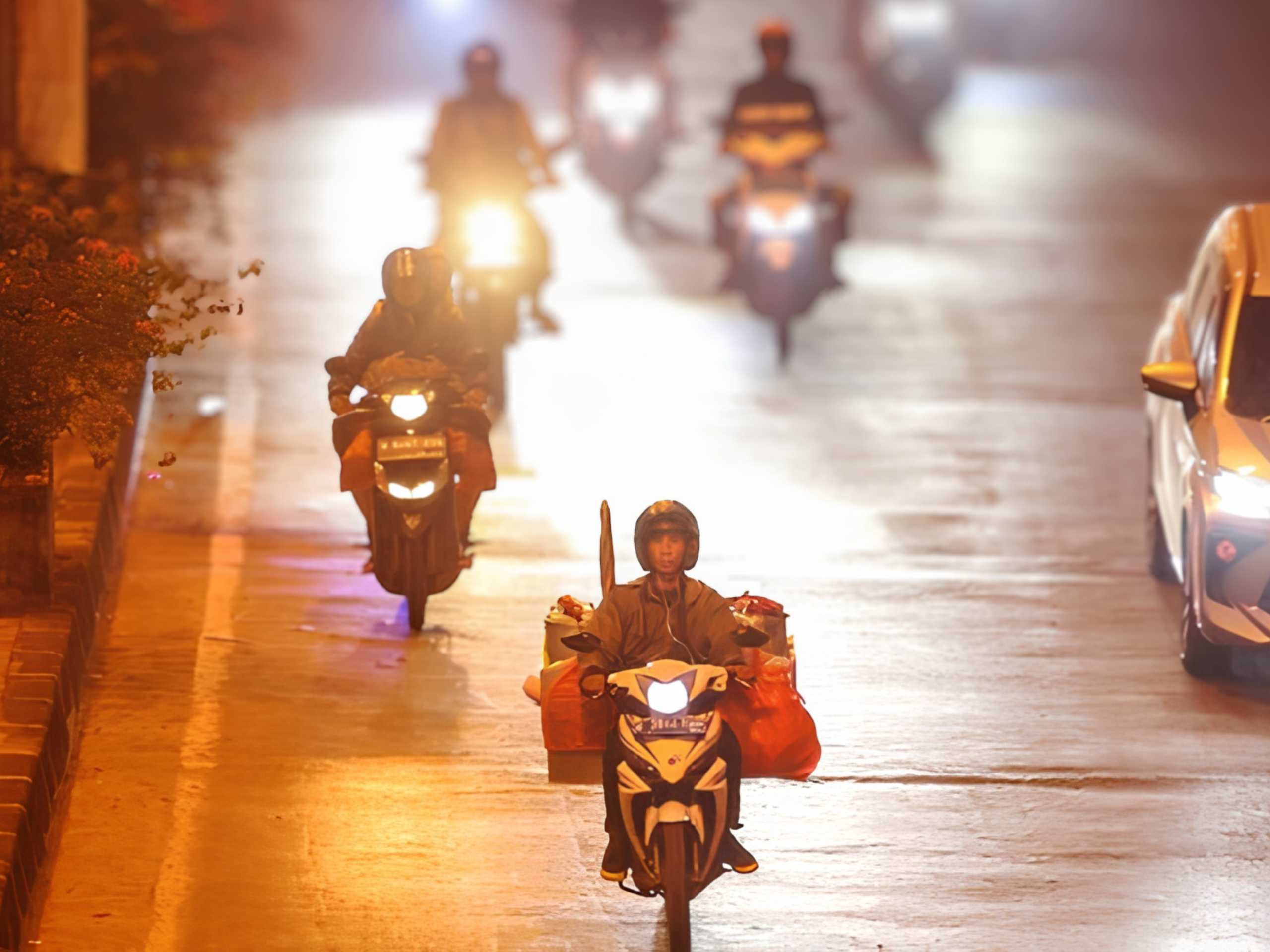
It was a video of a convoy of motorcycles, in the early dawn, with a huge silver box strapped to its back and the words “Bubur Tambun” printed behind them. They moved swiftly through roads that felt unusually empty, dark and silent, with the occasional flicker of streetlights as the riders disappeared deeper into the sleeping city.
The video came with the caption, “Gimana jadinya kalau kami ga ada 7 hari?” — or translated, “What would happen if we stopped working for seven days?” The video taps into a viral trend where different professions highlight just how essential their jobs are to everyday life. But what made this one especially memorable is the humor behind it. These abang-abang Bubur Tambun seems to operate on a mission: “not make the whole Indonesian get gastritis”. And honestly, judging from the comment section, everyone seems to agree.
And BOOM, suddenly everybody I know in Jakarta starts to review their morning Bubur Tambun. It became a one night buzz.
Beyond the virality, humor, and how good Bubur Tambun tastes, I think the video shared a story, more than what it seemed to represent. So what makes it special?
The History of Bubur Tambun
Many wonders, where Bubur Tambun started and where it got its name. Bubur Tambun traces its roots back to its origin at the Tambun area in Bekasi, where they built the unique breakfast culture to travel long distances from Bekasi to Jakarta, Bogor, Tangerang, even Depok, with each route stretching tens of kilometers. Many of these vendors come from Kampung Buwek and Kampung Pulo in South Tambun, and surprisingly this culture has been passed on for generations since the early 1980s!
What makes Bubur Tambun distinctive is also the style of porridge that is quite different in comparison to many Jakartans porridge that use yellow chicken broth. Bubur Tambun is inspired by the chinese style porridge that is relatively drier with various toppings like cakwe and tongchai (chinese pickled radish), with no innards satay to enjoy it with. So in many ways, Bubur Tambun reflects a long history of cultural assimilation.
The Unseen Ecosystem Behind Every Labor
What people sometimes dont understand is how a large part of the public in Indonesia depends on Bubur Tambun.
In today’s economy, Bubur Tambun is one of those foods that stays as a trustworthy companion for many people. Most of the time, it costs around Rp 10.000 to Rp 12.000. Remarkably affordable in a time where food and ingredients prices continue to rise and even simple meals become harder to access for many people.
Yet somehow, it quietly supports the economic ecosystem around it. Long before sunrise, traditional markets are already active because of this routine, with rice and spice sellers, chicken vendors, and packaging suppliers all becoming part of the chain that supports it. And inside many homes in Tambun, wives, mothers, and many family members help its creation by cooking through the night so that the motorcycles could leave at dawn.
It empowers people somewhere between that rush every morning, where a simple bowl of breakfast is built upon shared labor, cooperation, and small household economies that grow to survive Jabodetabek’s relentless pace.
The Power of Everyday Storytelling
Getting back to how it became viral – besides the fact that they nailed the humor and trend – is how they transform an ordinary routine to a story.
When being told, maybe people could see it as simply a group of porridge sellers selling and feeding people across Jabodetabek.
But through social media, the sight of motorcycles carrying huge containers through the dark, empty streets at 3.00 a.m., is what makes it emotional and compelling for me. It is not corporate, and not glamorous. But the visual language of everyday labor, culture, and discipline, reminds me that even the most ordinary routines can carry powerful strikes when we see it from a deeper perspective.
And, maybe that is also why it feels important beyond just taste.
For countless workers, students, drivers, and families, this warm bowl of Bubur Tambun became viral precisely because it captured something real, something familiar, yet deeply human.
So, wanna try one?
***