
“Have You Seen That TikTok I’ve Sent You?” is How Gen Z Communicates Today
Written by Santika Vania Putri
These days, I somehow feel like I’m too young to relate to the core of Millennials but too old to relate to the Gen Zs.
I was born in 1997, a year that placed me in an interesting cultural grey area. People often call us “zillennials,” a micro-generation sitting right between millennials and Gen Z. We grew up with Yahoo and MSN Messenger, early Facebook statuses, and the era when posting on Instagram is not complete without the vignette filters. At the same time, we also witnessed the rise of memes, the weird slang, and the chaotic brilliance of short-form video. In many ways, somehow, people my age became translators between two communication worlds.
Millennials tend to use text, such as blog posts, status updates, or carefully curated captions to express themselves. Gen Z, however, communicates through something much more visual and immediate. Like a meme or a fifteen-second video on platforms such as TikTok or Instagram Reels. Indeed, this shift isn’t simply about format. It reflects a deeper transformation in how younger generations build meaning, relationships, and identity.
“Let’s keep our streak alive!”
Have you ever heard of the TikTok streaks? Basically, you and a friend need to maintain a daily conversation by sending each other TikTok videos. Streaks act as a “medal” representing a long-lasting, low-maintenance connection through consistent direct messaging.
In my TikTok and Instagram direct messages, my friends keep sending me funny videos, useful tutorials, and even place recommendations randomly. It’s not like I ever ask for one, but it’s how we maintain relationships nowadays.
Moreover, those short-form videos are not just entertainment; it is a form of emotional shorthand. Instead of explaining how they feel in long messages, they might send you just a thirty-second video, or they just repost a video that perfectly captures their mood. On TikTok, you can find what kind of videos the others have reposted. A study even found that Gen Z users don’t just reshare content for fun. They use it as a subtle method of self-expression and emotional communication. Almost like a digital diary entry.
These changes are already reshaping how young people interact with one another. It almost feels like a ritual now to send short videos to our friends to maintain relationships instead of asking, “How are you?”
Why is this happening?
To understand why this is happening, you have to look at how digital platforms and online culture have evolved over the past few years as well as how social behavior itself is changing in digital spaces.
Starting from the rise of short-form video culture, such as TikTok, Instagram Reels, and YouTube Shorts. These kinds of formats are raw, spontaneous, and often imperfect content thrives. Many of the platforms’ most viral videos are simple: a quick joke filmed in a bedroom, a relatable rant about everyday life. Or a humorous take on something trending online.
These content normalized communication that is quick, visual, and low-effort because they are easy to share. This is where the shift from “How are you?” to sending videos to each other begins.
Gen Z’s way of communicating
Maintaining relationships today is no longer always about starting conversations, it’s about maintaining presence. Sending a TikTok and keeping a streak alive becomes a way of saying, “I’m here,” “I thought of you,” or even “This is how I feel.” Without the pressure of crafting a response or carrying a conversation forward.
In a fast-paced digital environment, this kind of interaction lowers the barrier to staying connected. It removes the need for emotional energy that comes with traditional check-ins, while still fulfilling the social need for connection. Over time, this behavior evolves into a habit, almost a ritual, where consistency matters more than depth.
This environment also gave rise to a new wave of content creators whose appeal lies in their authenticity rather than production quality (although right now a lot of content is edited professionally, but still uploaded on these platforms, rather than long-form such as YouTube).
To back this up, a study by Jakpat found that Gen Z tends to be more receptive toward content creators and influencers compared to older generations. This is reflected in the significantly higher trust scores that Gen Z gives to influencers compared to millennials.
As audiences consume this kind of content daily, it gradually shapes how they communicate with each other as well. Humor becomes quicker, references become more layered, and visual storytelling becomes the default language.
What does this mean for brands and public relations (PR)?
The way Gen Z communicates presents both a challenge and an opportunity. Traditional communication strategies, such as carefully crafted press releases, highly polished campaigns, and top-down messaging, often feel distant to these kinds of audiences. One of the biggest shifts is that communication today is less about broadcasting messages and more about participating in conversations.
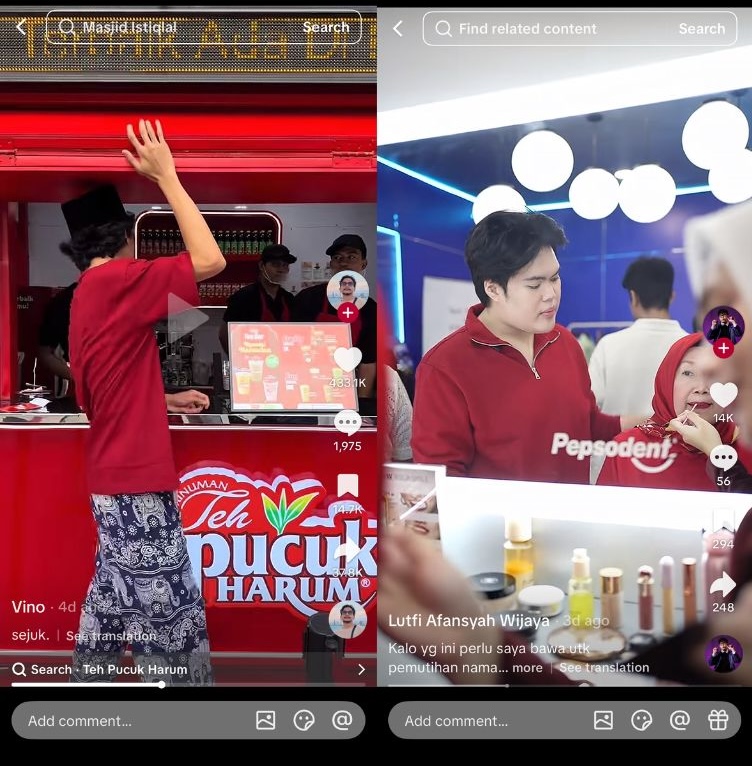
If you look at TikTok or Instagram, audiences don’t simply consume content; they remix it, react to it, and reinterpret it. For brands, this means that successful communication often involves entering existing cultural moments rather than trying to create entirely new ones.
Another important takeaway is the growing value of authenticity. Many viral videos and content creators resonate with Gen Z are not highly produced advertisements, but rather spontaneous, humorous, or relatable content created by individuals. Thus, brands that appear overly scripted or corporate can somehow feel disconnected from the digital culture that younger audiences inhabit.
For example, brands that tap into trending sounds on TikTok, create a self-aware humor, or collaborate with creators who already understand their audience tend to perform better. A simple video that captures a relatable moment, like everyday struggles at work or niche jokes, can generate stronger engagement because it feels real and familiar.
On the other hand, advertisements that feel overly engineered or “gimmicky” are no longer as effective as they once were. Today’s audiences, especially Gen Z, have been exposed to years of digital marketing tactics, making them highly skilled at recognizing when something is trying too hard to sell. What might have worked a few years ago now often triggers skepticism instead of interest.
It’s not uncommon to see comment sections flooded with remarks like, “ini campaign brand apa lagi?” or “this feels like an ad”, even before the brand is explicitly revealed. In many ways, audiences have developed a kind of collective radar for branded content. This is why many organizations are increasingly collaborating with content creators or adopting a more conversational tone in their social media presence.
For public relations specifically, the shift toward visual and cultural communication also changes how narratives are built and shared. News about a brand may spread not only through traditional media coverage but also through short videos or commentary from creators and online communities. Monitoring these conversations and understanding the cultural context behind them has become an essential part of reputation management.
So, where do I stand as a Zillennial PR practitioner?
As someone who sits between the two generations, I often feel like I’m constantly switching lenses. I understand the intention behind a well-written caption or a carefully structured message, but at the same time, I instinctively reach for TikTok to search for something and end up doomscrolling short videos until dawn.
As PR professionals, this shift opens up bigger opportunities in how we communicate and reach specific audiences. While traditional approaches, such as media relations and press releases remain essential, they are no longer sufficient on their own.
Hence, platforms like TikTok and Instagram Reels, along with the growing influence of content creators, allow us to extend and amplify our narratives into the digital ecosystem. They give brands the ability to translate key messages into formats that feel more relatable, timely, and culturally relevant to the younger audiences.
Need help to communicate your brands to a certain audience? Hit us up at admin@praxis.co.id!