
Can The Devil Wears Prada 2 Make Journalism Feel Great Again?
Written by Regina Stephanie W.
There was a time when journalism didn’t just look important, it looked sexy. Long before doomscrolling and short videos dominated the status quo, I remember the younger me watching those 90s and 2000s romcoms that turned the job writers, editors, and the journalists into the stereotype for witty-chic girls, with lots of ambitions, and dreams. From The Devil Wears Prada, How to Lose a Guy in 10 Days, 27 Dresses, Sex and the City, and many more.
Journalism is portrayed as more than a career – it was a lifestyle.
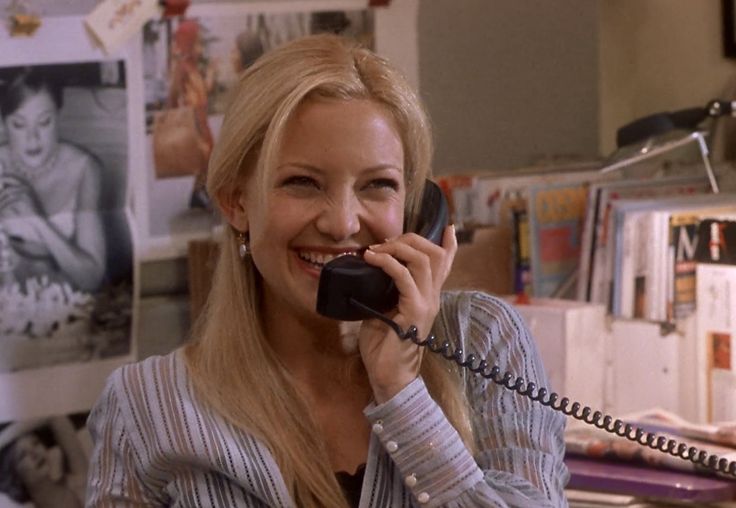
Source: @Cloudypixels, Kate Hudson in How to Lose A Guy in 10 Days. Pinterest
Yes you are in a fast-paced office, with impossible deadlines. However, you make a “decent” amount of money, are able to wear fashionable wardrobes, are invited to parties, have dynamic and passionate relationships, and are an aspiring independent city girl with a promising and huge media job ahead. Cool right? I believe this nuance resonates deeply to a certain percentage or even an entire generation’s dream.
For many young people growing up in that era (or at least the Gen-Zs that love those romcoms), we were sold the idea of journalism through rose-tinted glasses.
The Devil Wears Prada 2 arrives at a time where journalism feels far less sexy in the public imagination. Right now, the current media landscape feels like a paradox. On one hand, traditional media is still viewed as the most credible source for factual reporting, but, influencers and community media are increasingly dominating the attention engagement and online discourse.
Add AI and the current political landscape to the mix, and it feels like the entire industry is slowly losing hope in this industry altogether.
The question then becomes, can this movie once again make the youngsters believe journalism is a dream worth pursuing?
The Movie Recap
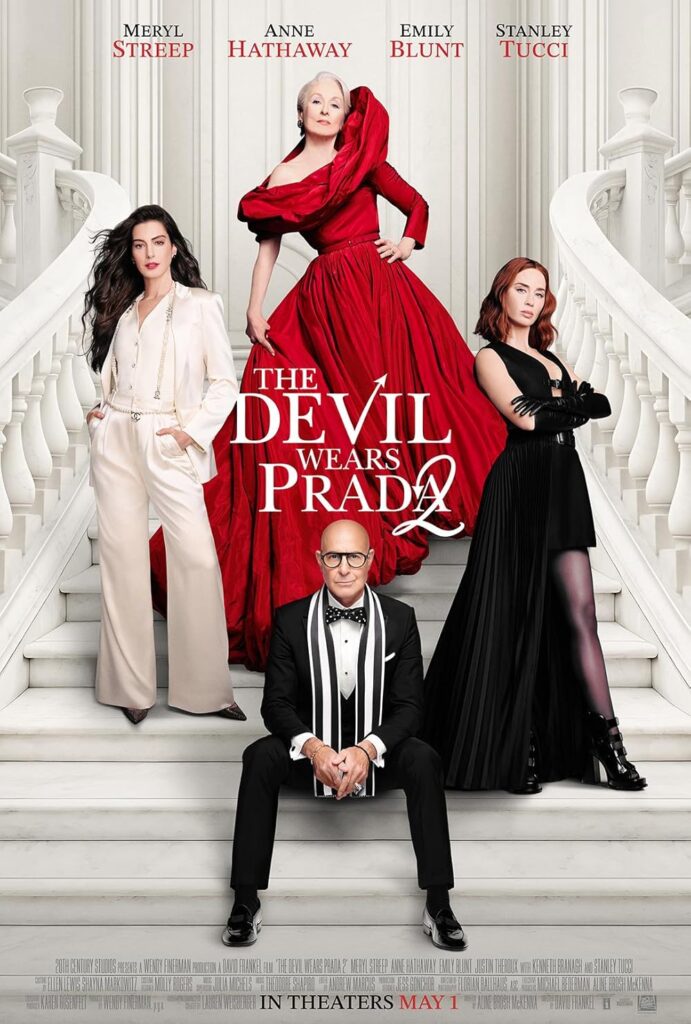
Source: The Devil Wears Prada 2 Poster (2026). IMDb.
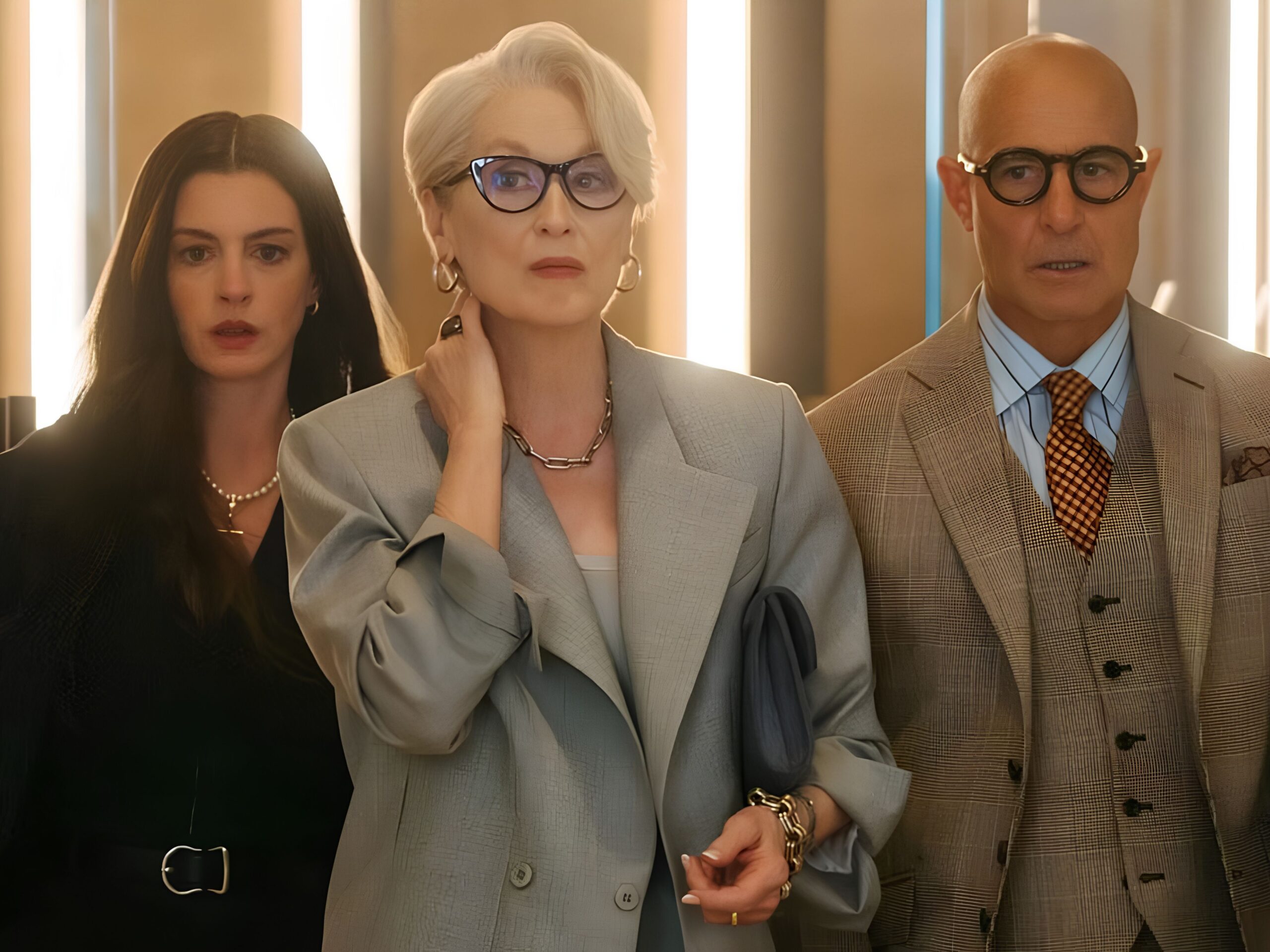
For those of you who haven’t watched the movies (smh…), The Devil Wears Prada story begins with Andy Sachs (Anne Hathaway), a fresh graduate journalist, unexpectedly lands a job as the assistant to the most intimidating and ruthless editor-in-chief of a top fashion magazine, Miranda Priestley (Meryl Streep). As time goes by, Andy moves past her career anxiety and wardrobe disasters, eventually becoming Miranda’s trusted and iconic assistant – or as what the movie would call “the job a million girls would kill for”, surviving her impossible demands while holding onto her dream of becoming a prestigious journalist.
Twenty Years later in The Devil Wears Prada 2, Andy is now a highly respected journalist that works for a great New York Newspaper. Just a split second before receiving the journalism award, Andy and her team have just received a massive layoff email from their company. Ouch…
On the other hand, Runway has just gone through a huge PR crisis and is suffering from severe financial distress within the shifting media landscape. To restore the magazine’s tarnished credibility, Runway miraculously hired Andy as the new feature editor. But this time, the challenge is no longer just about producing great journalism – it is about surviving the ruthless demands of the online metrics, where virality, and “gaining traction” have become the ultimate currency in every higher-ups meetings.
The Devils Wear Prada 2 vs Indonesia Situation
To a certain extent, those who work in Indonesian media must have resonated with Andy’s predicament and challenges. With the rise of AI, media buyouts, and massive media layoffs, the trust in media shifts where digital creators often replace traditional reporters and writers as the defining voice in an industry.
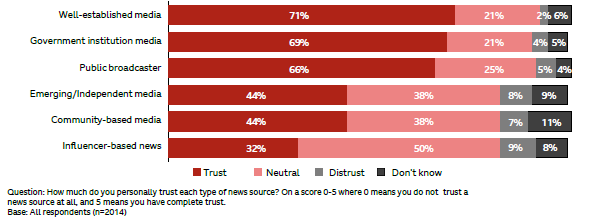
BBC Media Action Graph – How much trust in each type of news sources
A report from BBC Media Action (2025), highlights Indonesia’s media landscape major shift from a traditional, institution-led ecosystem into a more hybrid and creator-driven one. While 71% of the respondents still hold their highest trust to established and major media outlets such as Kompas and Tempo, 44% of the respondents are more likely to trust independent or community-based media because they feel this media best represent their daily concerns.
At the same time, influencer-based media only recorded a 32% trust level overall, yet their influence continues to grow as they are deemed to be more relatable, visually engaging, and easier to understand compared to conventional journalism.
Then, Can This Sequel Reignite Its Magic?
So, I had the chance to talk with arguably, one of the few people who truly understand both worlds equally well. She’s an ex-journalist, a devoted movie lover, pop-culture enthusiast, and coincidentally now is one of my seniors.
And I think what she said genuinely reflects the complicated situation.
When I asked whether journalism is still a dream worth pursuing for younger generations, her answer was both yes and no. Yes, because it has never existed in vacuum – it constantly evolves alongside culture, technology, and the audience it serves. If the media want younger people to care, then journalism also needs the younger generation to communicate in their language and bring attention to issues they genuinely care about.
The “no” part is as simple as if your goal is to be rich (lol). Well, beneath the joke, I think we can agree that this is a very real concern about the state of journalism in Indonesia today: low salaries, uncertain press freedom, and the industry is still struggling to adapt to the digital era.
She admitted that this perspective might sound counterintuitive and overly idealistic. But in today’s political climate, we actually need journalism more than ever. Because journalism remains one of the few institutions whose responsibility remains as the verifier and interpreter over what is happening in the world. And I think what clicked to me: “if you are not ready to reconcile with that, then probably you need to convince yourself first.”
And maybe that is why The Devil Wears Prada 2 still resonates deeply to many people. Not just because of the nostalgia, amazing casts, and songs choices — it reminds us of a time when storytelling and chasing what you are so passionate about is what truly makes journalism, “the job a million girls would kill for”, no matter the era or challenges.
***
Reference:
BBC Media Action. (2025). A metamorphosis in Indonesian media: The evolving roles of traditional media and influencers.